 TITANIUM COMPUTING
(512) 623-9199
Free consultation
TITANIUM COMPUTING
(512) 623-9199
Free consultation
CASE STUDIES · TITANIUM COMPUTING
Titanium Computing Put Claude on the Phones — and Automated Tier 1 Support End to End
Two Titanium-built platforms — AmpCortex and ClientSync — connected end to end, with Claude Sonnet, Opus, and Haiku each doing the job it's built for. We run our own support line on it every day.
The Problem
Every MSP knows the Tier 1 grind. Support calls interrupt engineers doing billable work. Callers phone in about tickets they submitted an hour ago. And the most expensive failure mode is the double contact: a customer submits a ticket, hears nothing for a while, and calls right back — now consuming two channels for one issue.
Titanium Computing wanted its clients to reach resolution faster while its engineers stayed heads-down: tickets over phone queues, instant acknowledgment over silence, and intelligent routing over round-robin assignment. Rather than buying a call-center product and bolting AI onto it, Titanium built the system it wanted — and runs its own support line on it every day.
The Solution
Two Titanium-built platforms, connected end to end, with Claude as the intelligence layer at every step.

CLAUDE SONNET
AmpCortex answers the phone
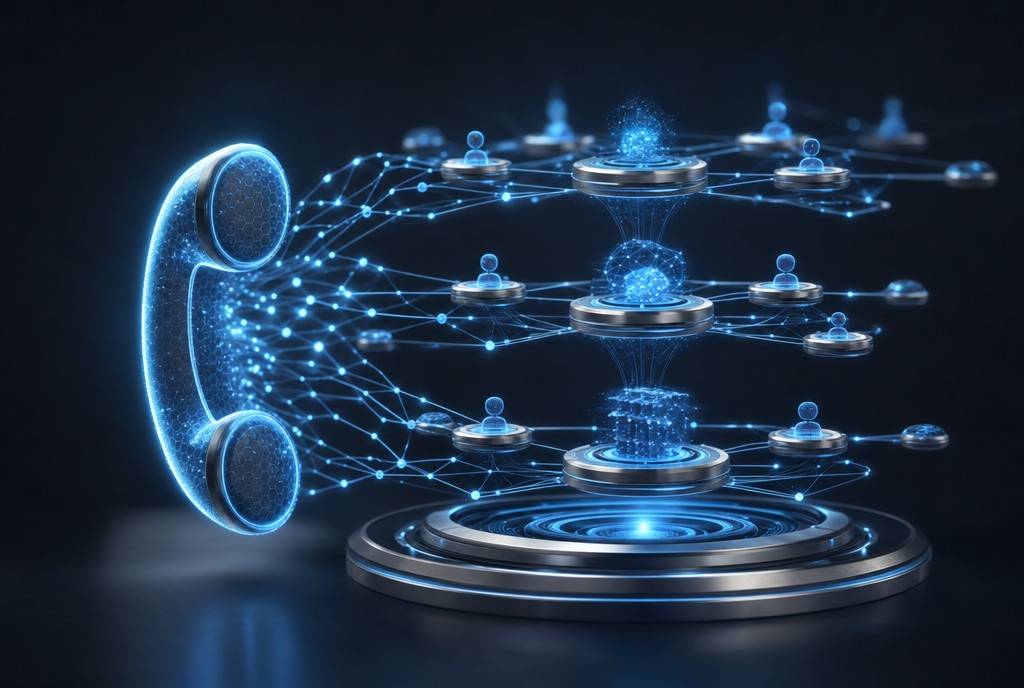
Among the first PBX systems built AI-native, with agents as first-class citizens. A Claude-powered agent answers the Tier 1 line and reasons through the call. Existing ticket? It looks it up and gives a live status — the call ends in under a minute with the customer informed. New issue? It conducts the full intake interview and creates the ticket on the caller's behalf. Sonnet drives the live conversation — fast enough for natural real-time dialogue, capable enough to follow a structured intake protocol with an unpredictable human on the line.
CLAUDE OPUS
ClientSync takes the handoff
The moment a ticket lands, Claude Opus takes over triage: it assesses current ticket load across the technician bench, matches the issue type to the most relevant technician weighing expertise against workload, reads the ticket notes and checks the client's other open and recent tickets so related problems surface as patterns instead of duplicates, and produces a briefing note for the assigned technician — context in hand before they open the ticket.

CLAUDE HAIKU
Haiku closes the loop
Claude Haiku drafts and sends the first customer email response immediately — acknowledgment, ticket details, what happens next. That first touchpoint lands within minutes of the call ending, which directly attacks the double-contact problem: customers who hear back fast don't call again to ask if anyone saw their ticket.
The Architecture
Titanium engineers AI systems as production infrastructure, and two design decisions define this one.
Models are tiered by job, not by habit. Sonnet handles real-time conversation, where latency and dialogue quality rule. Opus handles triage, where reasoning depth across ticket history, technician load, and issue classification pays for itself. Haiku handles high-volume templated communication, where speed and cost win. One model doing all three jobs would be worse at two of them.
Integrations compound. Titanium owns the entire codebase, so AmpCortex integrates with whatever a customer's stack requires — Zoho, Google Calendar, Atera, and ClientSync are live today. Every custom integration built for one client becomes an open baseline available to every subsequent customer on the platform. Voice is deliberately multi-provider (ElevenLabs and others via SIP), keeping the audio layer competitive while Claude remains the reasoning layer throughout.
The Results
The double-contact problem is attacked at the source: when acknowledgment lands within minutes, the "did you see my ticket" callback never happens — and the engineer interrupt it would have caused never happens either.
Why Claude
A support agent speaks for the company with every sentence. It must follow the intake protocol exactly, never invent ticket statuses, validate identity before acting, and hand off cleanly when a call exceeds its lane. Titanium selected Claude for instruction reliability under the unpredictability of live conversation, reasoning quality for triage decisions that engineers actually trust, and a model family with genuine tiers — letting one vendor's models be right-sized across three very different jobs in the same pipeline.
And because Titanium runs its own support on this stack, every claim above is one we live with daily. We don't sell anything we wouldn't answer our own phones with.
ABOUT TITANIUM COMPUTING
Titanium Computing is an Austin-based managed services and AI development firm specializing in cybersecurity and production AI systems. We design, build, and operate Claude-powered platforms across legal, automotive, communications, and business services — including HoLaCe, CallScrub, AmpCortex, and ClientSync. AmpCortex is deployed with production clients today.